'%3e%3cpath%20d='M24.427%2010.8738C24.3105%2010.6796%2024.0386%2010.6407%2023.8444%2010.7573L21.2425%2012.4272C21.7862%2013.2815%2022.0969%2014.2524%2022.0969%2015.3398C22.0969%2018.2912%2019.6891%2020.699%2016.7377%2020.699C13.7862%2020.699%2011.3784%2018.2912%2011.3784%2015.3398C11.3784%2012.3883%2013.7862%209.98055%2016.7377%209.98055C17.4367%209.98055%2018.0969%2010.0971%2018.7182%2010.3689L16.7377%2015.3786L19.6503%2010.8738L21.3202%208.31065C21.4367%208.11648%2021.3978%207.84463%2021.2037%207.72813C20.8153%207.49512%2020.427%207.26211%2020.0386%207.06793C15.7668%204.93201%2010.4852%205.70871%207.02888%209.20385C2.60169%2013.5145%202.60169%2020.6602%206.99004%2025.0485C11.3784%2029.4369%2018.5241%2029.4369%2022.9512%2025.0485C26.7959%2021.2039%2027.3008%2015.2621%2024.427%2010.8738Z'%20fill='%2318191F'/%3e%3cpath%20d='M32.0779%200C29.9419%200.466019%2027.7284%201.63107%2025.8643%203.49515C25.3983%203.96116%2024.9711%204.42718%2024.6216%204.93204L22.7963%204.69903L21.8643%205.63107C22.7186%206.01942%2023.573%206.60194%2024.3497%207.3398L23.9614%207.72815L24.3885%208.15534C25.5536%206.99029%2026.1361%206.40777%2027.1458%205.39806L25.0876%208.15534C25.6701%208.81553%2026.1361%209.5534%2026.4468%2010.2524L27.3788%209.32039L27.1458%207.49514C27.6507%207.1068%2028.1167%206.67961%2028.5827%206.25243C30.408%204.34951%2031.6118%202.13592%2032.0779%200Z'%20fill='%2318191F'/%3e%3cpath%20d='M43.1455%2011.8835H38.9125C31.2232%2011.8835%2031.2232%2022.136%2038.9125%2022.136H43.1455C43.6504%2022.136%2044.0387%2021.7476%2044.0387%2021.2428V21.2039C44.0387%2020.6991%2043.6504%2020.3107%2043.1455%2020.3107H38.9125C34.1747%2020.1166%2034.1747%2013.9418%2038.9125%2013.7865H43.1455C43.6504%2013.7865%2044.0387%2013.3981%2044.0387%2012.8933V12.8156C44.0387%2012.3107%2043.6504%2011.8835%2043.1455%2011.8835Z'%20fill='%2318191F'/%3e%3cpath%20d='M53.5534%2020.3107C53.5146%2020.3107%2053.5146%2020.3107%2053.5534%2020.3107H53.165H52.7767C48.0388%2020.1166%2048.0388%2013.9418%2052.7767%2013.7865H53.165H53.5534C58.2524%2013.9418%2058.2524%2020.1166%2053.5534%2020.3107ZM53.5534%2011.8835H53.165H52.7767C45.0874%2011.8835%2045.0874%2022.136%2052.7767%2022.136H53.165H53.5534C61.2427%2022.136%2061.2427%2011.8835%2053.5534%2011.8835Z'%20fill='%2318191F'/%3e%3cpath%20d='M99.6117%2020.6602L96.3495%2017.0097L99.5728%2013.4369C99.8058%2013.1651%2099.8835%2012.7767%2099.7282%2012.4661C99.5728%2012.1554%2099.2621%2011.9224%2098.9126%2011.9224C98.4854%2011.9224%2098.0971%2012.1165%2097.8252%2012.3884L95.0291%2015.534L92.233%2012.3884C91.9612%2012.0777%2091.5728%2011.9224%2091.1456%2011.9224C90.7961%2011.9224%2090.4854%2012.1165%2090.3301%2012.4661C90.1748%2012.7767%2090.2524%2013.1651%2090.4854%2013.4369L93.7087%2017.0097L90.4466%2020.6602C90.2136%2020.9321%2090.1359%2021.3204%2090.2913%2021.6311C90.4466%2021.9418%2090.7573%2022.1748%2091.1068%2022.1748C91.4952%2022.1748%2091.8447%2022.0195%2092.0777%2021.7476L94.9903%2018.4855L97.9029%2021.7476C98.1359%2022.0195%2098.5243%2022.1748%2098.8738%2022.1748C99.2233%2022.1748%2099.534%2021.9806%2099.6893%2021.6311C99.8835%2021.2816%2099.8447%2020.9321%2099.6117%2020.6602Z'%20fill='%2318191F'/%3e%3cpath%20d='M67.3787%2020.3107C67.3398%2020.3107%2067.3398%2020.3107%2067.3787%2020.3107H64.3495V13.7476H67.3787C72.1165%2013.9418%2072.1165%2020.1166%2067.3787%2020.3107ZM67.3787%2011.8835H63.1456C62.6408%2011.8835%2062.2524%2012.2719%2062.2524%2012.7767V21.2428C62.2524%2021.7476%2062.6408%2022.136%2063.1456%2022.136H67.3787C75.068%2022.136%2075.068%2011.8835%2067.3787%2011.8835Z'%20fill='%2318191F'/%3e%3cpath%20d='M85.7862%2011.8835H81.5532C73.8638%2011.8835%2073.8638%2022.136%2081.5532%2022.136H85.7862C86.291%2022.136%2086.6794%2021.7476%2086.6794%2021.2428V21.2039C86.6794%2020.6991%2086.291%2020.3107%2085.7862%2020.3107H81.5532C76.8153%2020.1166%2076.8153%2013.9418%2081.5532%2013.7865H85.7862C86.291%2013.7865%2086.6794%2013.3981%2086.6794%2012.8933V12.8156C86.6794%2012.3107%2086.291%2011.8835%2085.7862%2011.8835Z'%20fill='%2318191F'/%3e%3cpath%20d='M81.2425%2016.0776C80.7377%2016.0776%2080.3105%2016.5048%2080.3105%2017.0097C80.3105%2017.5145%2080.7377%2017.9417%2081.2425%2017.9417H85.4755C85.9804%2017.9417%2086.3687%2017.5534%2086.3687%2017.0485V17.0097C86.3687%2016.5048%2085.9804%2016.1165%2085.4755%2016.1165H81.2425V16.0776Z'%20fill='%2318191F'/%3e%3c/g%3e%3cdefs%3e%3cclipPath%20id='clip0_63_956'%3e%3crect%20width='104'%20height='32'%20fill='white'/%3e%3c/clipPath%3e%3c/defs%3e%3c/svg%3e)
The Problem with Vibe Coding
Published: April 10, 2026.
Vibe coding has exploded in popularity over the last few years. So much so that it became the Word of Year for 2025 by Collins Dictionary. With large language models capable of generating working code in seconds, many developers and even non-developers have started relying on AI-assisted development to prototype, build tools, create apps, and launch full platforms.
At first glance, it feels revolutionary, and it absolutely can be. You describe what you want, and the AI writes the code. What once took hours from a qualified expert can now take minutes.
But while vibe coding can be powerful, it also comes with serious limitations. The code produced certainly isn’t perfect. Without understanding the risks, teams can quickly accumulate technical debt, security vulnerabilities, and unstable systems.
If you are experimenting with AI to build a product, already running a vibe-coded application that feels fragile, or responsible for evaluating whether your team’s AI-generated code is safe to scale, this article is for you.
You’ll better understand where vibe coding performs well and where it fails, as well as what a structured code cleanup process looks like before small issues turn to bigger ones.
What Is Vibe Coding?
Vibe coding is a fast, AI-assisted approach to software development where developers use large language models, such as Open AI or Claude Code, to write code for them.
Instead of manually writing functions, components, or scripts, a developer describes the desired outcome in natural language. The AI then interoperates this and generates the code.
For simple tasks, vibe coding can be incredibly efficient. A function that might take a developer an hour to write can be generated in five to ten minutes. This makes it appealing for quick experiments or MVP development.
However, there is a critical distinction between generating code and engineering software.
Large language models are powerful pattern recognition systems, but they are not fully aware of your entire project. They operate within context window limitations, meaning they cannot see every file or understand every dependency. This leads to mistakes that human developers would not normally make.
Vibe coding works best as a supporting tool. When used as a replacement for software engineering expertise, it often introduces hidden problems.
Is Vibe Coding Bad?
Not necessarily.
Vibe coding has legitimate use cases and can significantly accelerate certain workflows. The key is understanding where it performs well and where it falls short, and knowing when it can be a supporting tool or when you may be relying on it too heavily.
What Is Vibe Coding Good For
When used correctly, vibe coding is effective for:
- Rapid prototyping of simple applications
- Generating repetitive boilerplate code
- Writing small utility scripts
- Refactoring small code blocks
- Debugging assistance when stuck
- Learning syntax and language patterns
- Creating internal tools with limited scope
For small, self-contained tasks, AI code generation can save time and reduce friction. It can help developers overcome mental blocks or explore new frameworks quickly.
However, problems begin when vibe coding is used to build large-scale systems without oversight. Language models are not yet intelligent enough to manage complex architectures, evolving dependencies, and long term maintainability.
The result is often messy code, unnecessary complexity, and growing technical debt. Something that you’ll have to clean up in the aftermath.
Common Vibe Coding Issues
While vibe coding can accelerate development, it also introduces predictable issues, even across different vibe coding tools. These problems may not present themselves until after a project grows beyond its original scope, so they can be tricky to spot at first.
Software Development Bugs
One of the biggest limitations of vibe coding is incorrect code generation.
Even though AI models are improving, they still produce:
- Syntax errors
- Logical errors
- Incorrect conditional flows
- Broken loops
- Improper error handling
- Missing edge case validation
Because AI does not truly understand your application, it may generate code that looks correct and works in its preview environment, but fails under real-world conditions.
Another issue is hallucination. AI systems are known to sometimes fabricate functions, libraries, or API calls that do not exist. This can include made-up license keys, invalid authentication tokens, or imaginary configuration methods. All of these can lead to massive functionality problems down the line that you’re going to have to fix.
These hallucinations create confusion, especially for non-technical users who may not recognise the errors immediately.
Context window limitations also play a role. AI models do not normally know what exists in every file within your project. This leads to:
- Duplicate logic across files
- Incorrect imports
- Mismatched variable names
- Broken integrations
While small bugs may seem manageable at first, they compound quickly in larger systems.
Technical Debt
Vibe coding frequently introduces unnecessary code into a project. Where something can typically be done in an optimised way, vibe coding usually goes the long way round.
Common examples include:
- Full loops where a simple conditional would work
- Redundant function calls
- Overly complex logic for simple tasks
- Excessive abstraction
- Code bloat
This inefficiency might not break the system immediately. The software can still work and function, but in the same way that a car with a check engine light can still technically run. However, this creates technical debt, and like that car, it's something that’ll need to be fixed in a service.
Technical debt refers to the long term cost of poor architectural decisions. As features are added on top of messy foundations, performance slows, and maintainability decreases. Over time technical debt can stop you from being able to iterate and ship new features, but instead go back to correct past mistakes.
AI also sometimes uses outdated coding patterns. Programming languages evolve constantly, but AI models may rely on older training data. For example, OpenAI’s GPT-5.2 model – the most recent at the time of writing – has a knowledge cutoff date of August 2025. Any coding updates after this will not be known by the vibe coding tool.
This can lead to:
- Deprecated syntax
- Version mismatches
- Outdated libraries
- Inefficient implementation patterns
Over time, this outdated code becomes harder to maintain and upgrade.
Data Privacy and Security Risks
Another major concern with vibe coding is data exposure.
When developers paste code, database structures, or API keys into AI tools, they may unknowingly expose sensitive information. Unless every term and condition is carefully reviewed, it is unclear how that data is stored, processed, or used.
Risks include:
- Data privacy violations
- Intellectual property exposure
- Data breaches
- Poor data governance
- Cybersecurity vulnerabilities
There have already been numerous reported cases of data leaks and security incidents involving AI tools.
Plus, the code produced by vibe coding may not have the best security protocols and may be easy to bypass, which is something we’ll cover in more detail later.
For companies handling customer data, compliance and confidentiality must be prioritised. Blindly pasting internal code into third-party systems creates risk.
System Integration Challenges
Vibe coding works best in isolation. Problems arise when projects expand and require integration.
As systems grow, you need:
- Database connectivity
- Authentication flows
- Third-party API integration
- Backend services
- Environment configuration
AI often struggles with these complex integration tasks. It may fail to connect properly to databases or generate incorrect connection strings. In worse cases, it may even fabricate credentials or misconfigure authentication systems.
Without strong software engineering knowledge, users can get stuck in a cycle of prompts trying to fix issues that compound over time.
This leads to technical dependency, where developers rely on AI to solve problems they do not fully understand.
Vibe Coding Cleanup Audit
If you’re unsure how serious your vibe coding issues are, a structured audit gives you immediate clarity.
Our free Vibe Code Audit highlights security gaps, architectural weaknesses, duplicated logic, and hidden technical debt. You receive a prioritised action plan so you know exactly what to fix first and how to stabilise your software.
We work alongside your existing team to strengthen what’s already been built, helping you reduce risk and scale with confidence.
Start Code Cleanup Audit
Example of vibe coding gone wrong
Vibe coding can move incredibly fast, but when it is trusted without proper engineering oversight, the risks become real.
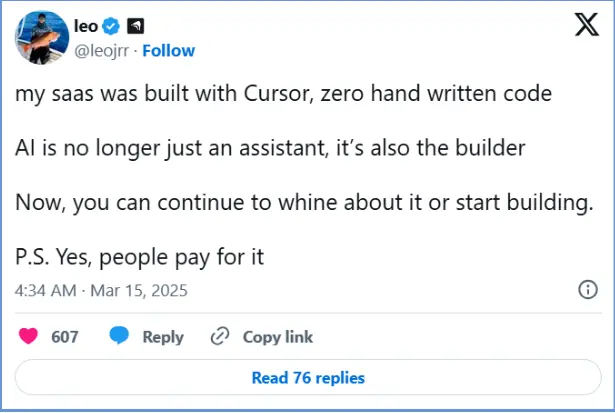
Leonel Acevedo publicly shared that he had built his entire startup, Enrichlead, using AI tools with zero handwritten code. The platform appeared polished. It supported user signups, processed subscriptions, and looked production-ready. Naturally, with how efficient vibe coding seemed to be to get a product to this stage, it makes sense to share.
Shortly after launch, serious problems emerged.
Acevedo began posting online that the platform was under attack. API usage was maxing out unexpectedly. Users were bypassing subscription payments and the database was filling with unauthorised entries.
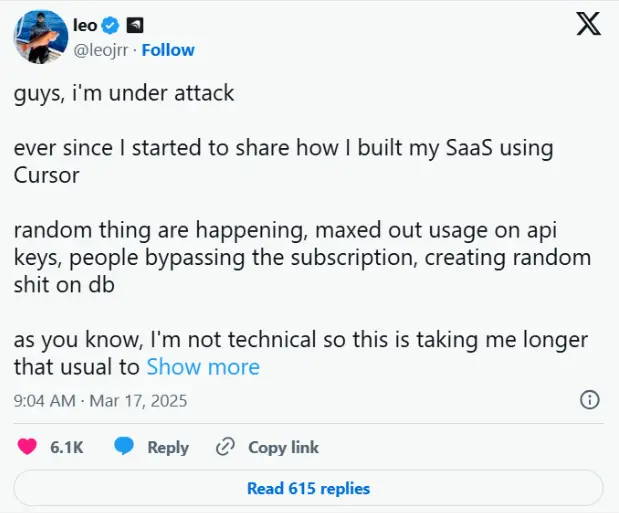
The issues were not the result of highly sophisticated attacks. They were fundamental security failures:
- No robust authentication enforcement
- No rate limiting on API endpoints
- No input validation protecting the database
- Insufficient access controls around paid features
The AI generated code had appeared functional, but critical security layers were either missing or poorly implemented. The application worked at the surface level, yet lacked the protections required for public deployment.
As the situation deteriorated, the system became increasingly unstable. Attempts to patch one issue triggered failures elsewhere. The underlying architecture had not been built with scalability or resilience in mind.
Eventually, the application was shut down.
This example highlights a serious reality: when a business runs entirely on vibe code the founder does not fully understand, it becomes difficult to diagnose problems, implement secure fixes, or scale responsibly.
Vibe coding can accelerate development, but without experienced review, structured testing, and strong security practices, it can expose startups to operational, financial, and reputational risk.
How to Fix Vibe Coding Issues
If your project was built using AI-assisted development and is showing signs of instability, structured cleanup is essential to ensure it works. Here are some key clean code principles that can help you fix vibe code.
To learn more, read our full article on how to write clean code.
- Conduct a full code audit: Review architecture, dependencies, and data flow to uncover duplicated logic, inefficient algorithms, outdated syntax, and security risks before fixing anything.
- Refactor for simplicity and efficiency: Remove redundant code, modernize outdated patterns, and enforce consistent naming and modular structure to reduce technical debt.
- Strengthen security and data handling: Eliminate hard coded secrets, secure authentication flows, and ensure credentials and user data are stored and transmitted safely.
- Improve integration architecture: Separate frontend and backend responsibilities, standardise database access, and validate API connections to support stable scaling.
Fix vibe coding issues with Codex Software
Vibe coding is not inherently bad. It is a powerful tool for rapid prototyping, debugging assistance, and small-scale development.
However, it is not a replacement for software engineering expertise.
Large language models still produce incorrect logic, outdated syntax, inefficient algorithms, and security vulnerabilities. They struggle with large-scale architecture and integration challenges.
Used wisely, vibe coding accelerates development. Used blindly, it creates technical debt and instability.
If your application feels fragile, slow, or difficult to maintain, it may be time for a structured cleanup.
Submit your project for a professional audit or explore our Vibe Coding Cleaning Specialist service to transform your AI-generated prototype into production-ready software.